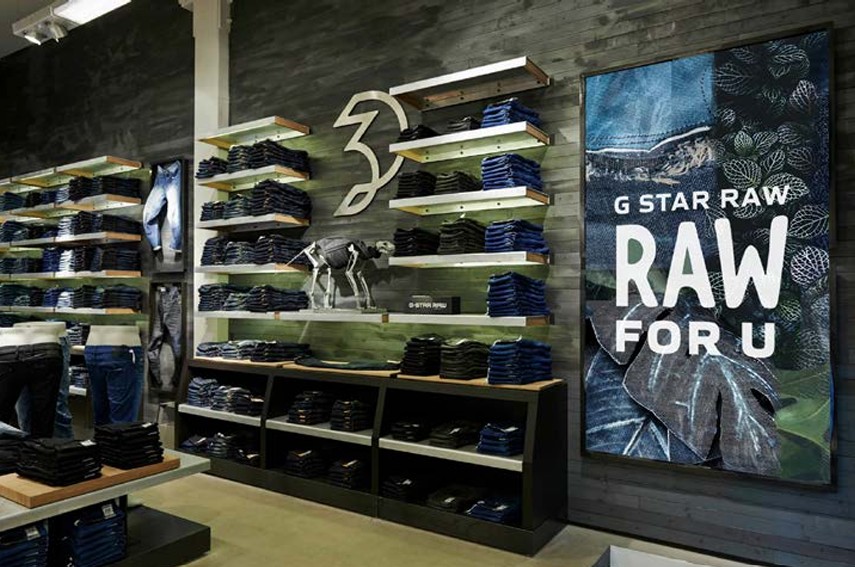
Circular service & UX design · Material loop

G Star RAW-4U

A circular service that turns a denim brand's worn jeans back into customized new pairs — and puts the customer inside the loop.

My role
Research lead &
brand/UX architect
Client
G-Star RAW
graduate project
Partner
Ellen MacArthur
Foundation
Year
2019
G Star RAW-4U — project snapshotproject snapshotimages/gstar-snapshot.jpg
01 — The brief

Extend a denim master's expertise into the customer's hands

G-Star had already mastered sustainable production. RAW-4U is a circular service that upcycles customers' worn jeans into customized new pairs — taking the brand's “Art of Raw” campaign, where artists turn denim waste into objects, and democratizing it so every customer becomes a co-creator.
My roleResearch lead and brand/UX architect — I designed the service framework end to end, from strategy through the customer-facing platform.
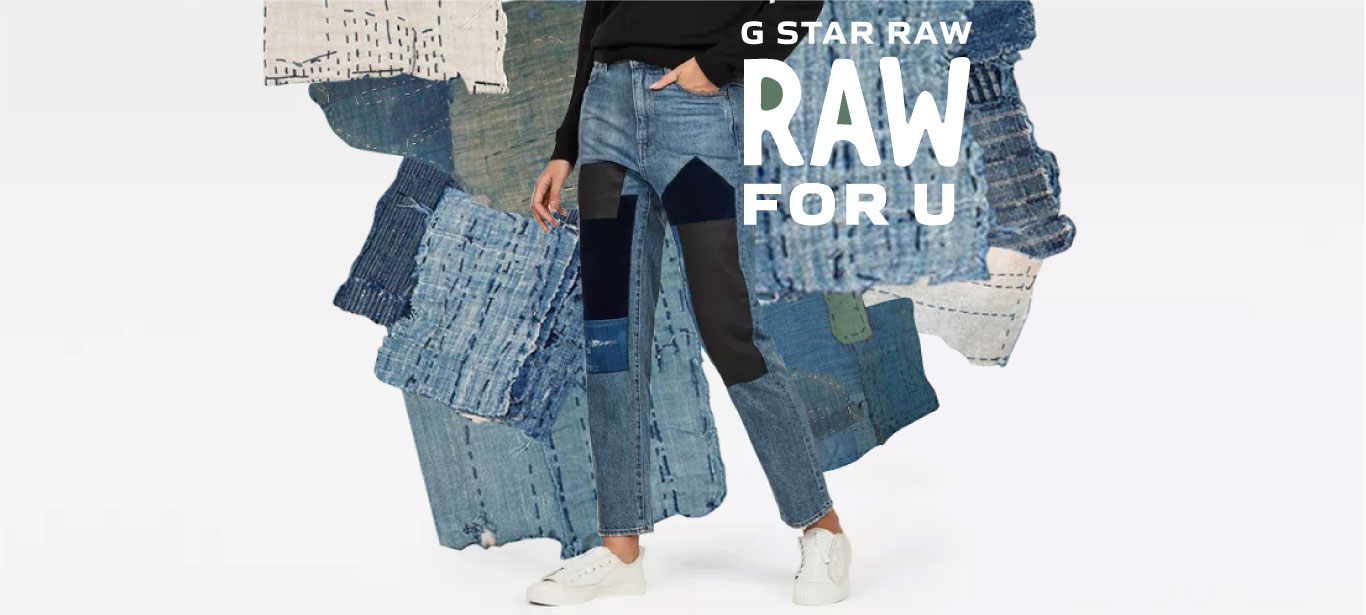
RAW for U brand mark
RAW for U
brand mark
images/gstar-01.jpg
“Art of Raw” → denim artwork
“Art of Raw” →
denim artwork
images/gstar-02.jpg
02 — Blue ocean

Find the space competitors weren't touching

A Strategy Canvas against Zara, River Island, and Scotch & Soda showed G-Star winning on upstream manufacturing and sustainability — but every brand performing identically on customer garment care and end-of-life disposal.

The uncontested space wasn't cleaner production. It was the customer after the sale.

To protect its lead, G-Star had to close the loop where it currently ends linearly — at customer engagement.
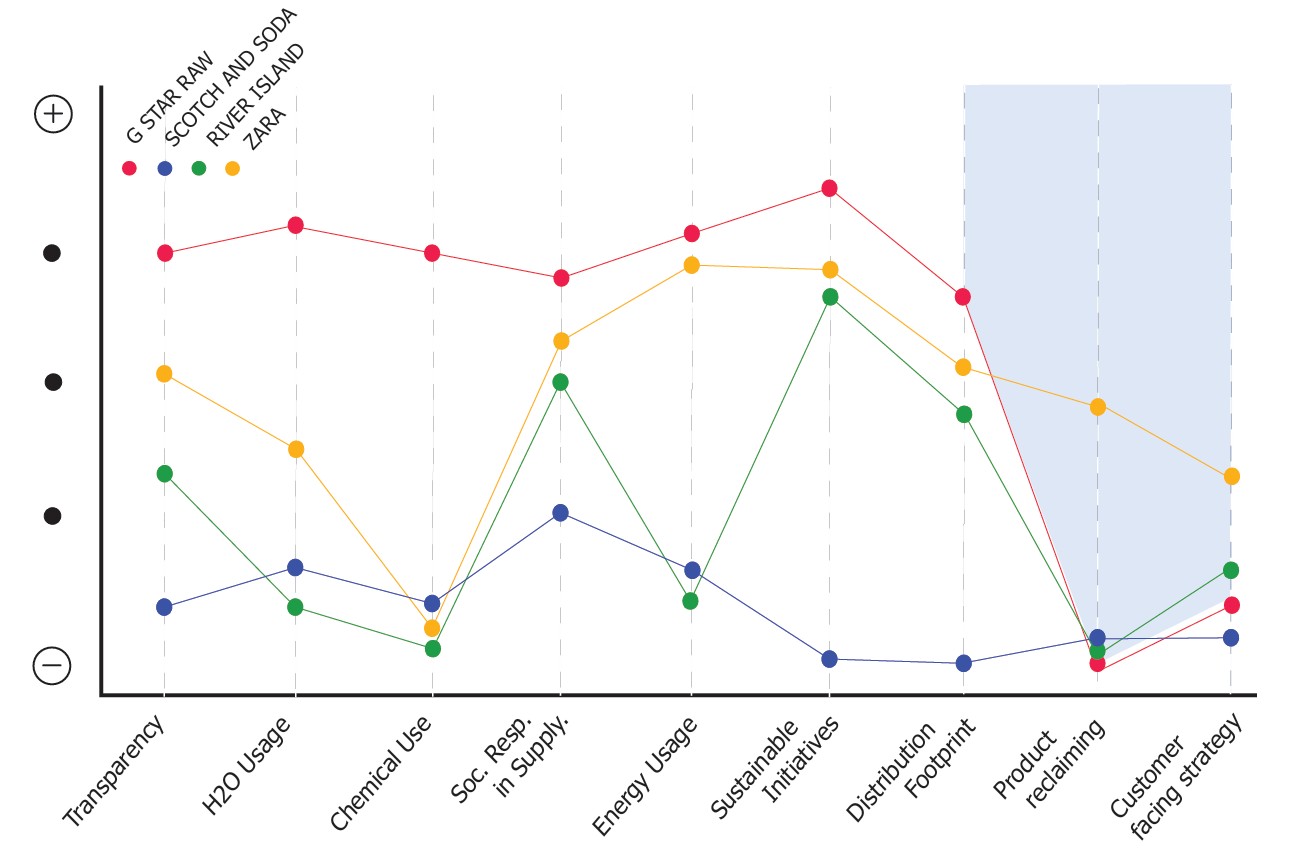
Strategy Canvas — G-Star vs. Zara, River Island, Scotch & Soda across nine sustainability dimensions
Strategy Canvas — G-Star vs. Zara, River Island, Scotch & Soda across nine sustainability dimensionsimages/gstar-03.jpg
03 — Map the gaps

Pinpoint where the experience broke down

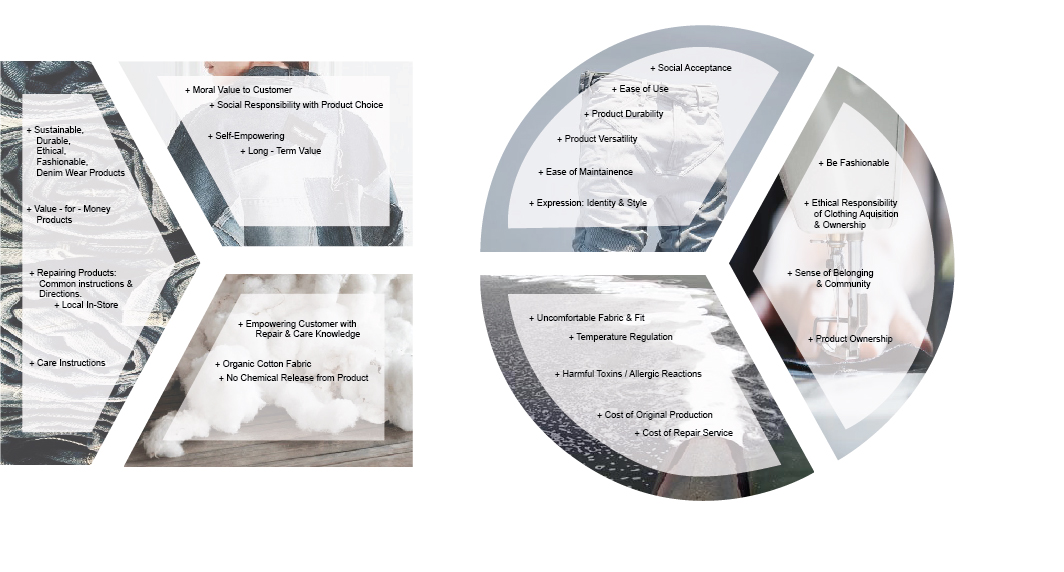
A Buyer Utility Map traced the journey from purchase through use to disposal, exposing weak environmental and convenience utility in exactly the phases brands ignore: maintenance and end-of-life.

Jobs to be done

What customers want

Durable, stylish denim they can own ethically.

Pains

Where it falls apart

Care complexity and disposal uncertainty — no clear, rewarding path for a worn pair.
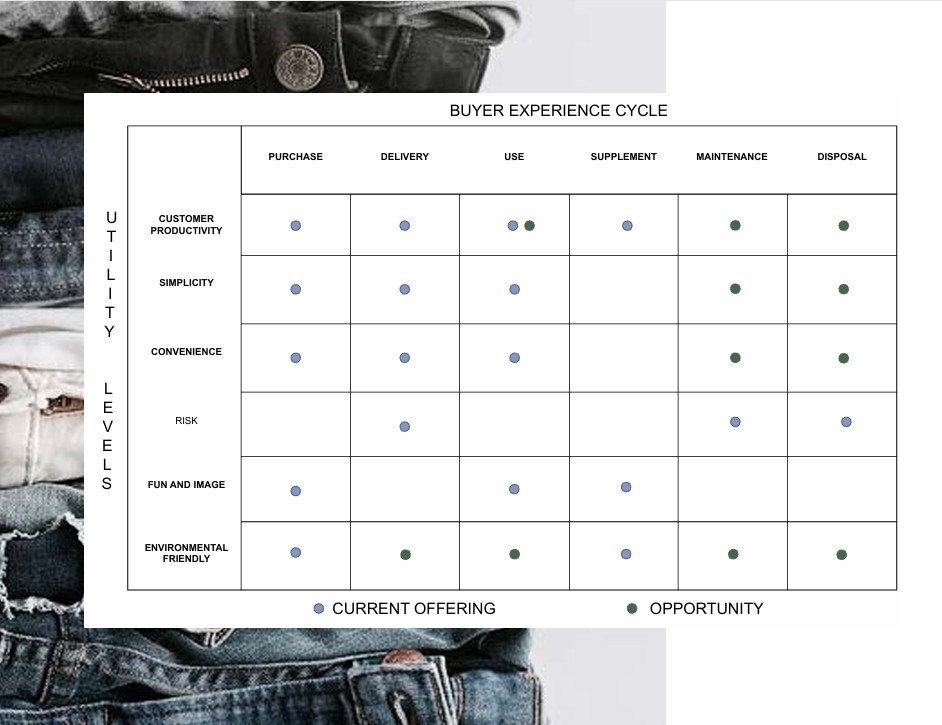
Buyer Utility Map (purchase → disposal)
Buyer Utility Map
(purchase → disposal)
images/gstar-04.jpg
Value Proposition Canvas
Value Proposition
Canvas
images/gstar-05.jpg
04 — Probe behavior

Understand how people actually feel about their jeans

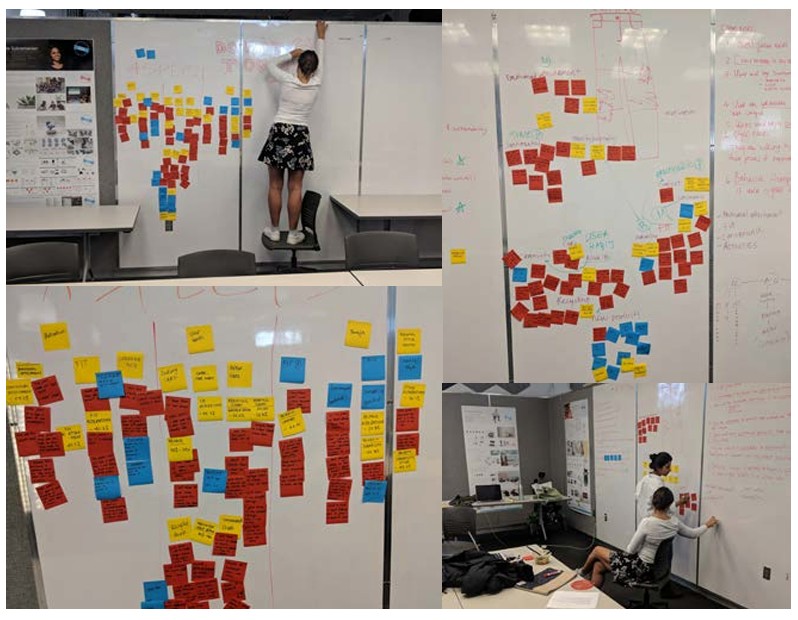
My roleDesigned and ran a three-stage cultural probe — a sticker-based survey, discussion, and a creative “what could your old jeans become?” activity.
36Probe participants
60%Emotionally attached to their jeans
MostAlready donate — not discard

Affinity diagramming clustered the responses into motivations, care habits, and perceived benefits — and surfaced the leverage point: universal emotional attachment plus an existing donation habit could be redirected into a closed return loop.
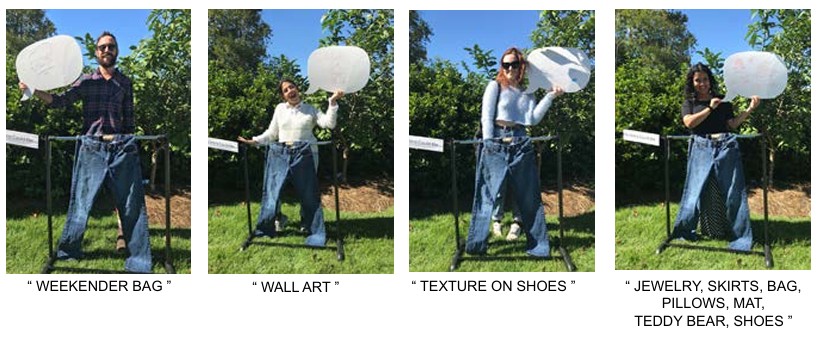
Cultural probe in the field
Cultural probe
in the field
images/gstar-06.jpg
Affinity diagram (three themes)
Affinity diagram
(three themes)
images/gstar-07.jpg
05 — Design RAW-4U

Build the service around instincts customers already have

Every worn pair becomes the start of a new one. Four parts make the loop work:

Touchpoint

In-store integration

Displays and staff introduce the circular program from the very first purchase.

Object

Smart packaging

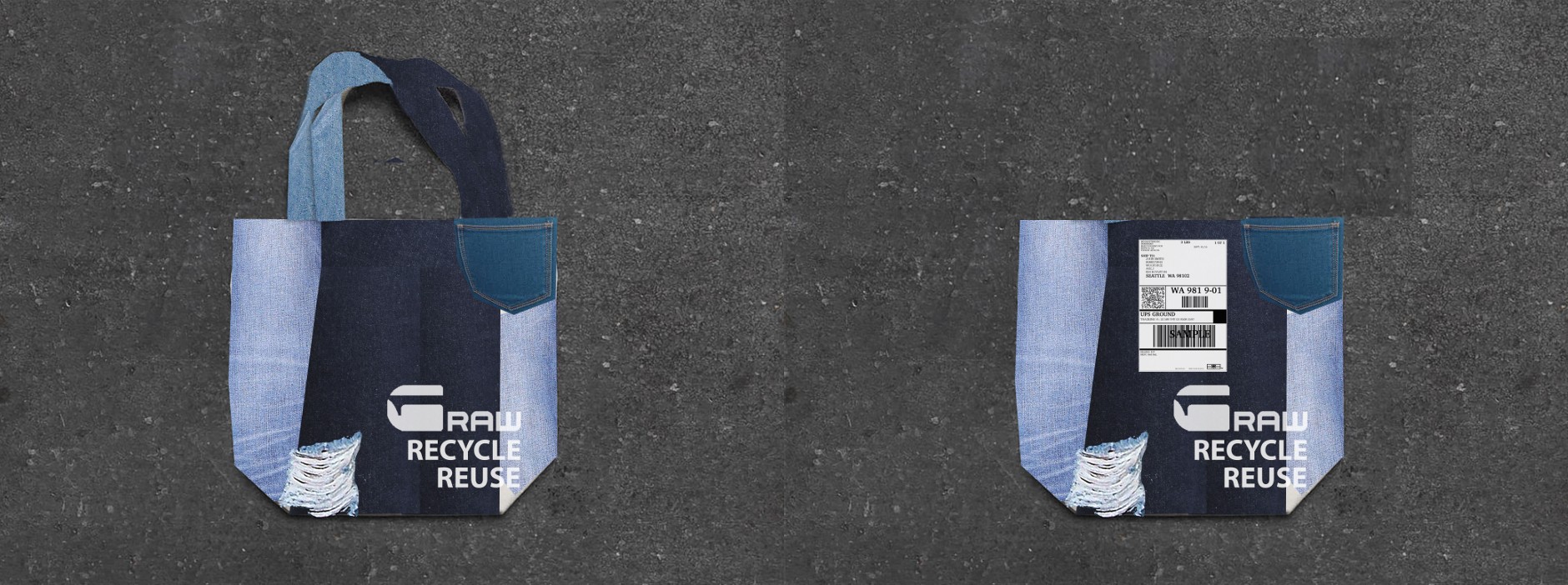
Reusable totes made from manufacturing off-cuts that double as prepaid return mailers.

Platform

Serial-number tracking

Existing G-Star serials let customers follow their jeans' lifecycle, get care tips, and prompts to return.

Incentive

Return & rewards

Scaled discounts based on how long you've owned the jeans — rewarding longevity, not churn.
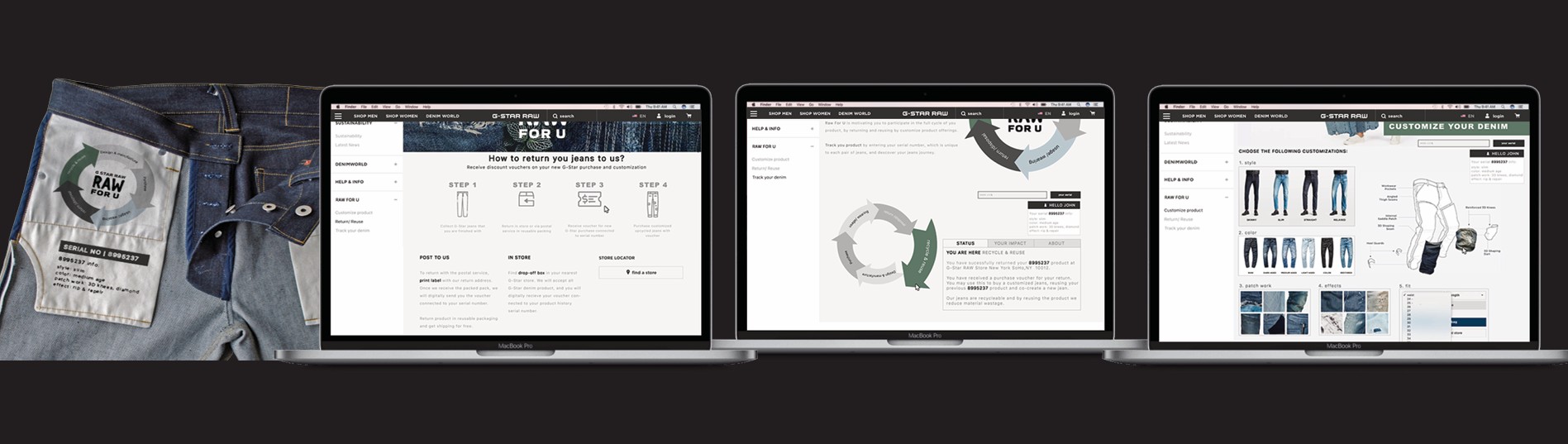
RAW for U platform — in-store screens, the serial-number hub, and customize/track interface
RAW for U platform — in-store screens, the serial-number hub, and customize/track interfaceimages/gstar-08.jpg
06 — Close the loop

Make the circular path the easy one

A behavioral-change map plotted the full journey — purchase → a yearly “jean-versary” prompt → serial-number tracker → return → voucher → a co-designed new pair → begin again. The serial number is the thread that holds it together: it keeps the customer–brand relationship alive even if the jeans change hands.
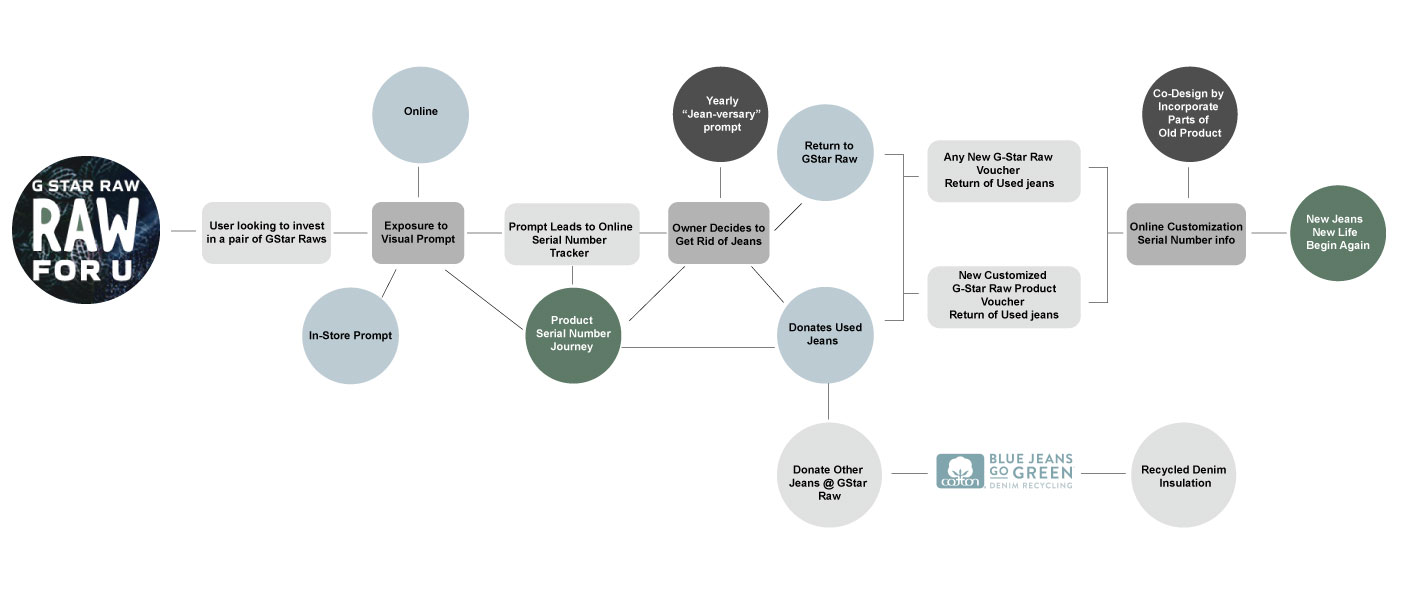
Behavioral-change circular map
Behavioral-change
circular map
images/gstar-09.jpg
Tote-to-mailer packaging
Tote-to-mailer
packaging
images/gstar-10.jpg
07 — Scale impact

Turn one service into a systemic model

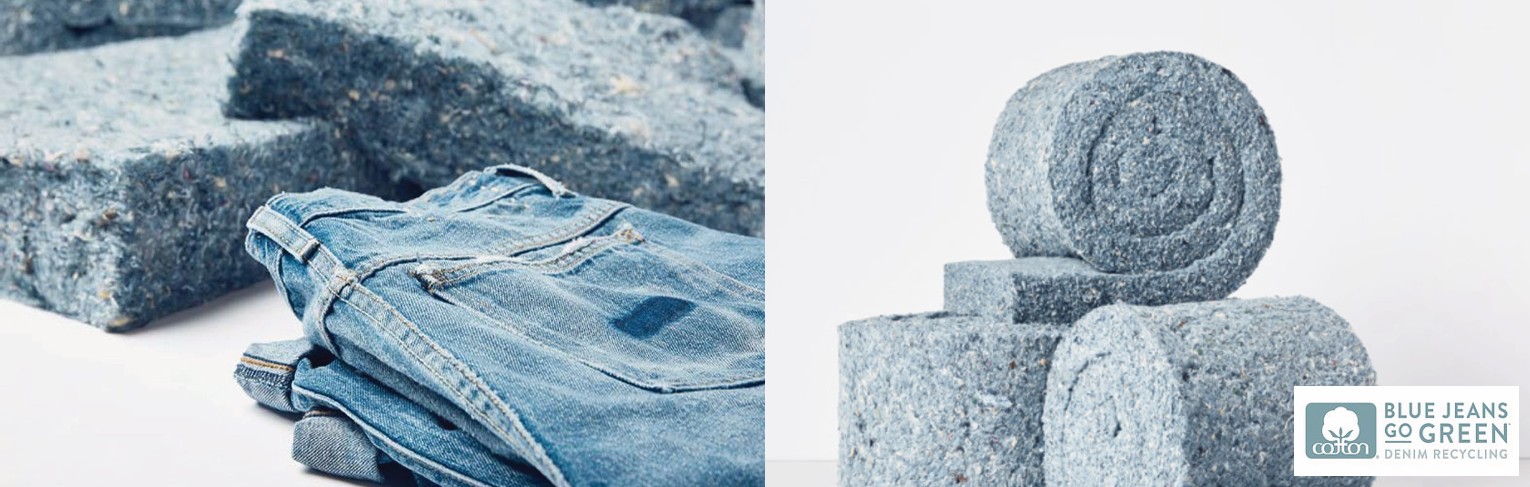
RAW-4U plugs into partners — Blue Jeans Go Green turns returned denim into building insulation — and builds on G-Star's existing sustainability network, positioning the brand to join the Ellen MacArthur Foundation's CE100 and align with the UN's sustainable-development agenda.
7UN Sustainable Development Goals aligned
CE100Ellen MacArthur Foundation pathway
Partnership & certification ecosystem (Blue Jeans Go Green, EMF, ZDHC, Fair Wage, and more)
Partnership & certification ecosystem (Blue Jeans Go Green, EMF, ZDHC, Fair Wage, and more)images/gstar-11.jpg

What RAW-4U proves

Sustainability as a service, not a slogan.

True circularity

Closes the lifecycle loop at the customer end, where every competitor leaves it open.

Loyalty by engagement

The serial number keeps the brand relationship alive across the product's whole life.

A scalable model

An industry-standard, EMF-aligned blueprint for corporate behavior change.

What it taught me

01

Six frameworks, one evidence chain — strategy canvas, buyer utility, value prop, cultural probe, affinity, behavior maps. The solution earned every decision.

02

The leverage point was emotional, not technical. People already love and already donate their jeans — the design redirected an instinct rather than inventing one.

03

The strongest circular design hides the work. The sustainable path simply became the most rewarding and convenient one.