Re-entering a community that had been let down before
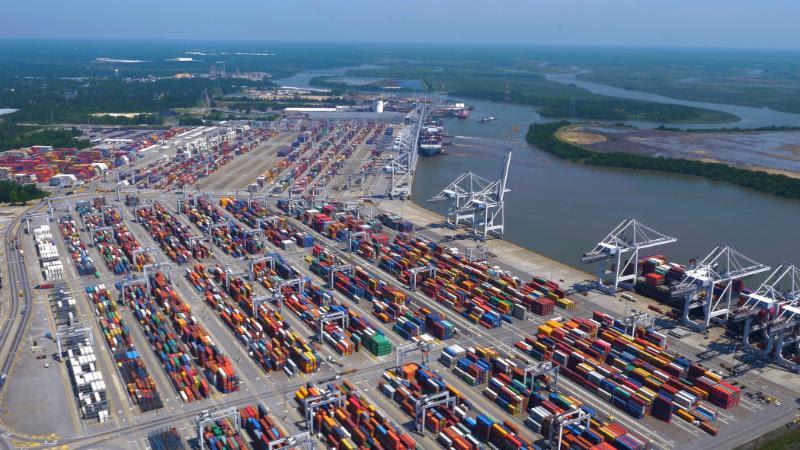
After a decade-long gap in SCAD–community partnerships, Dr. Mildred McClain of Harambee House brought our team into Hudson Hill — a predominantly African American, Gullah/Geechee neighborhood hemmed in by the Georgia port, freeways, and chemical plants.
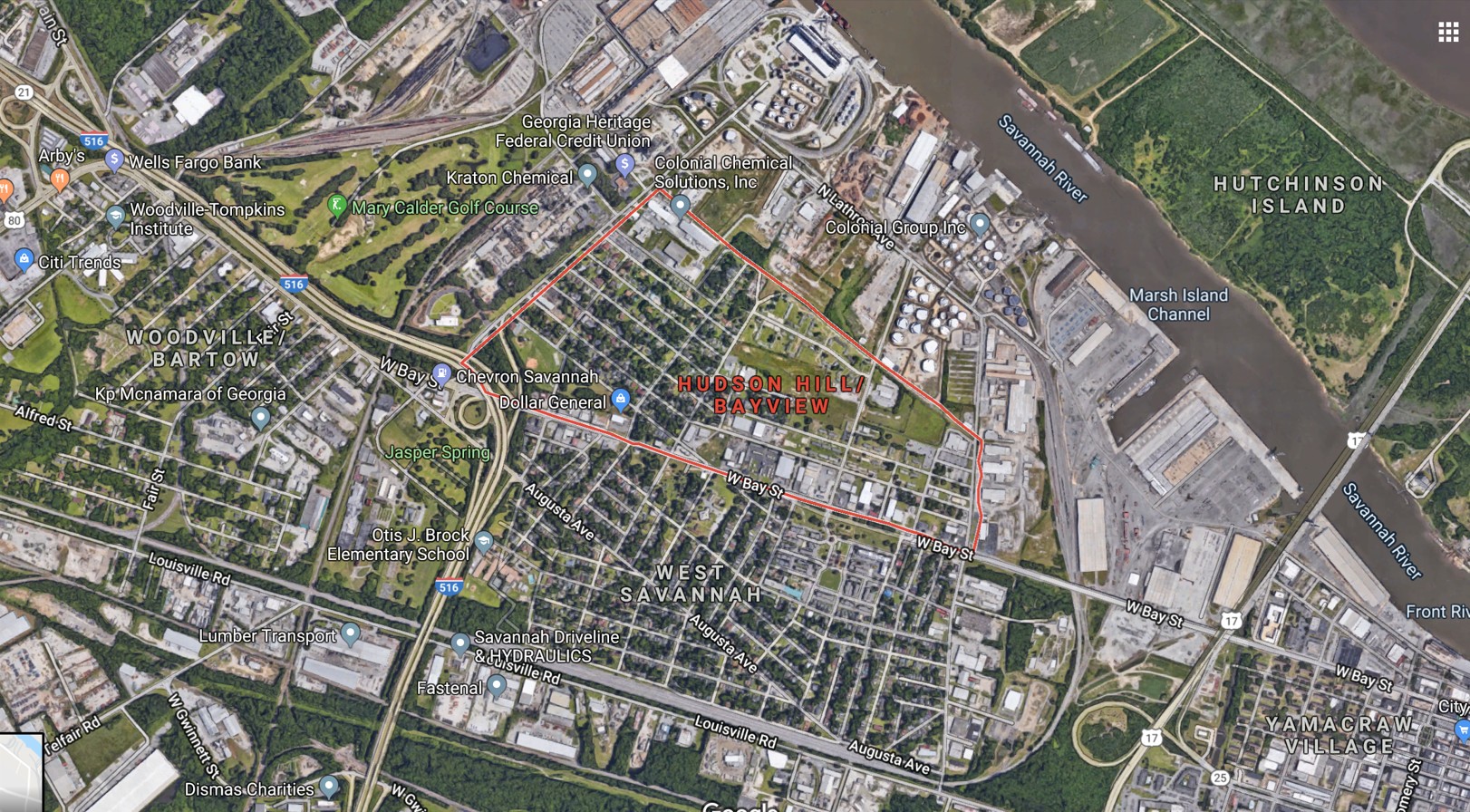
(port + 516 freeway)images/tabletalk-01.jpg
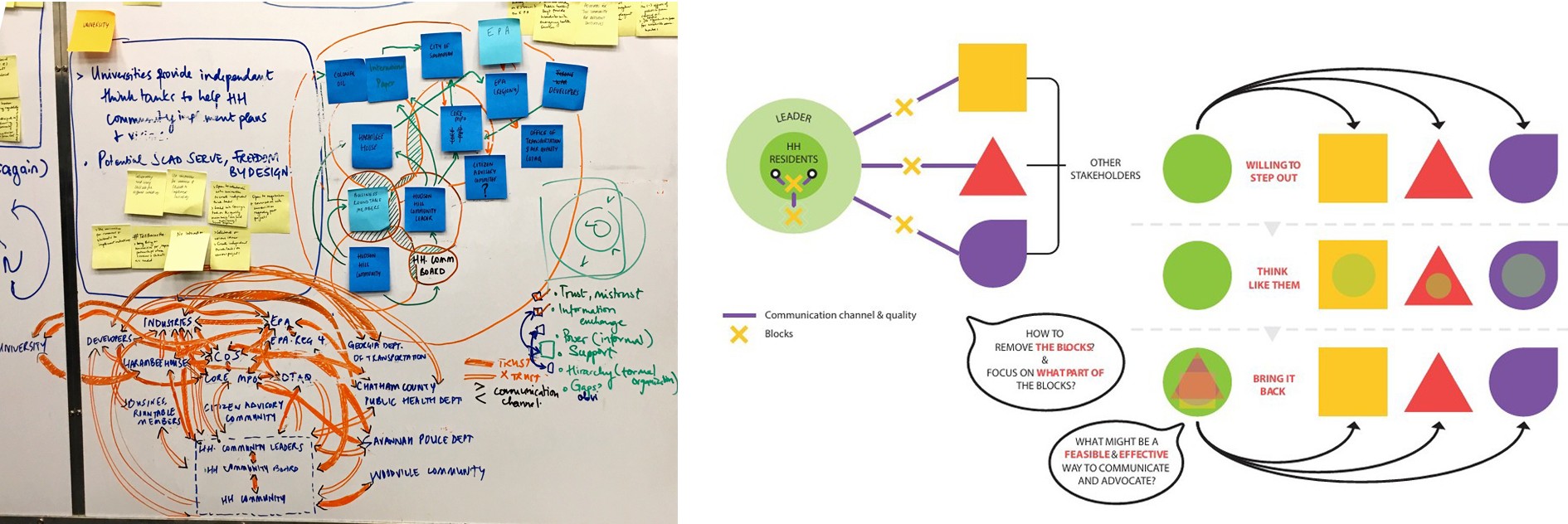
Mapping who held power — and who didn't
Primary research ran across three worlds that rarely sat in the same room: Hudson Hill residents, city officials (Savannah's Office of Sustainability, community outreach), and the Georgia Port Authority.
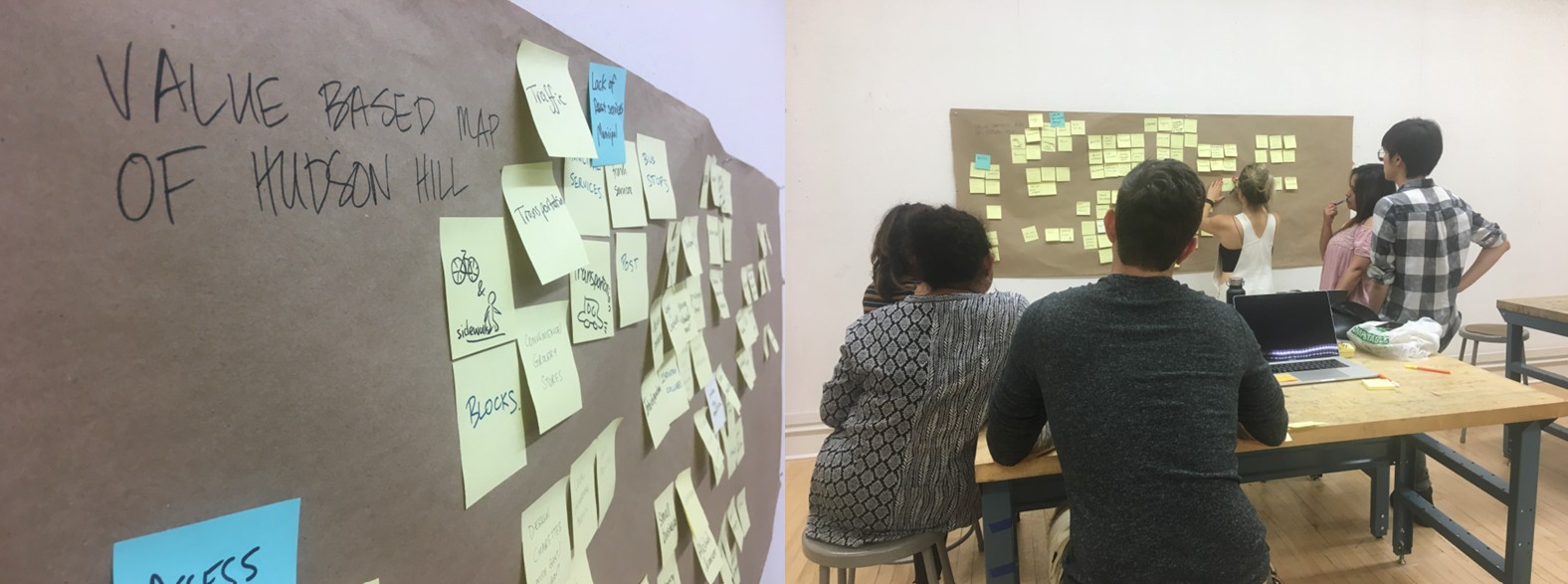
affinity mappingimages/tabletalk-03.jpg
(residents → port → city)images/tabletalk-04.jpg
The interviews reframed the whole problem
We're tired and we're done with people trying to shove what we don't want down our throats.— Hudson Hill resident
It wasn't only about pollution. It was about power and broken communication — residents shut out of the decisions shaping their own neighborhood. That shift, from environmental problem to communication problem, set the design direction.
Two insights cut through the noise
Good neighbors, not equitable partners
Industry counts meeting attendance and small donations as partnership. Residents want a genuinely equitable seat — not goodwill.
A seat at the table
Residents demand real involvement in decisions that affect them — and, tired of waiting, are forming their own environmental-justice group to get it.
A burnt-out community at the fulcrum of a wicked problem
With this many stakeholders, information flowed badly or not at all. So we mapped the actual communication channels — and the blocks sitting between residents and everyone with power over their future.
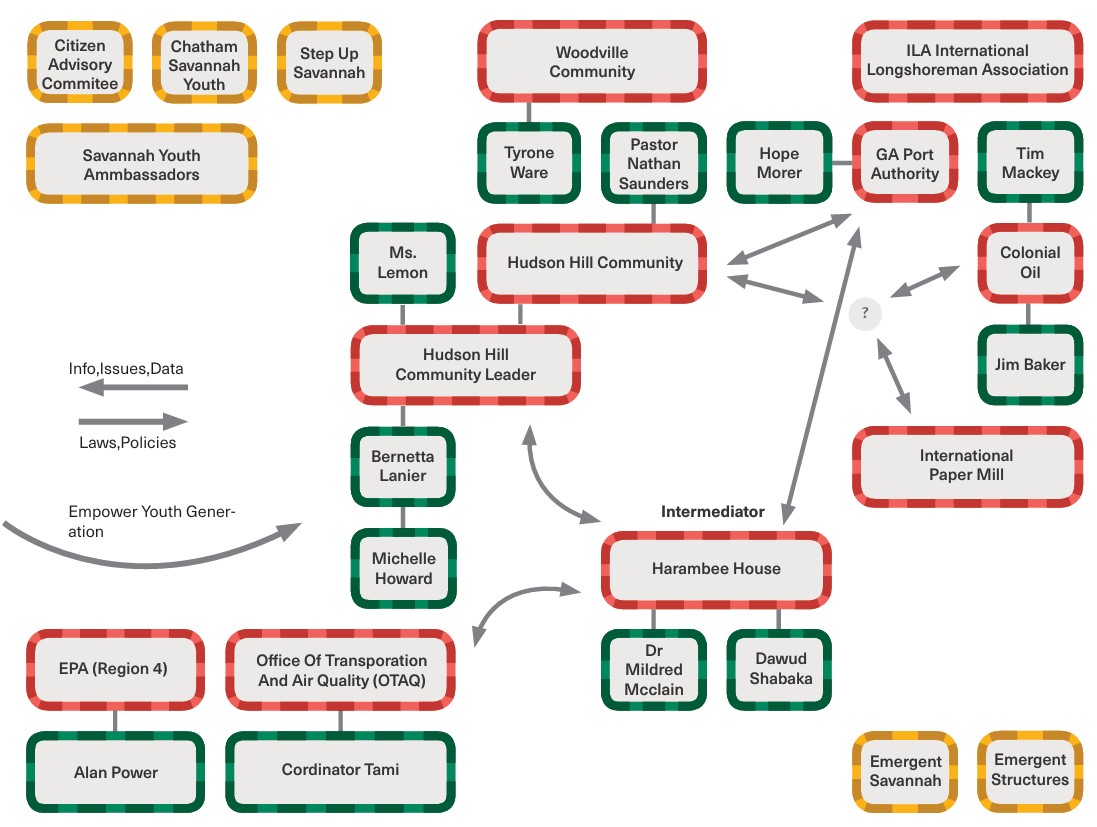
Table Talk: turn the standoff into an equitable negotiation
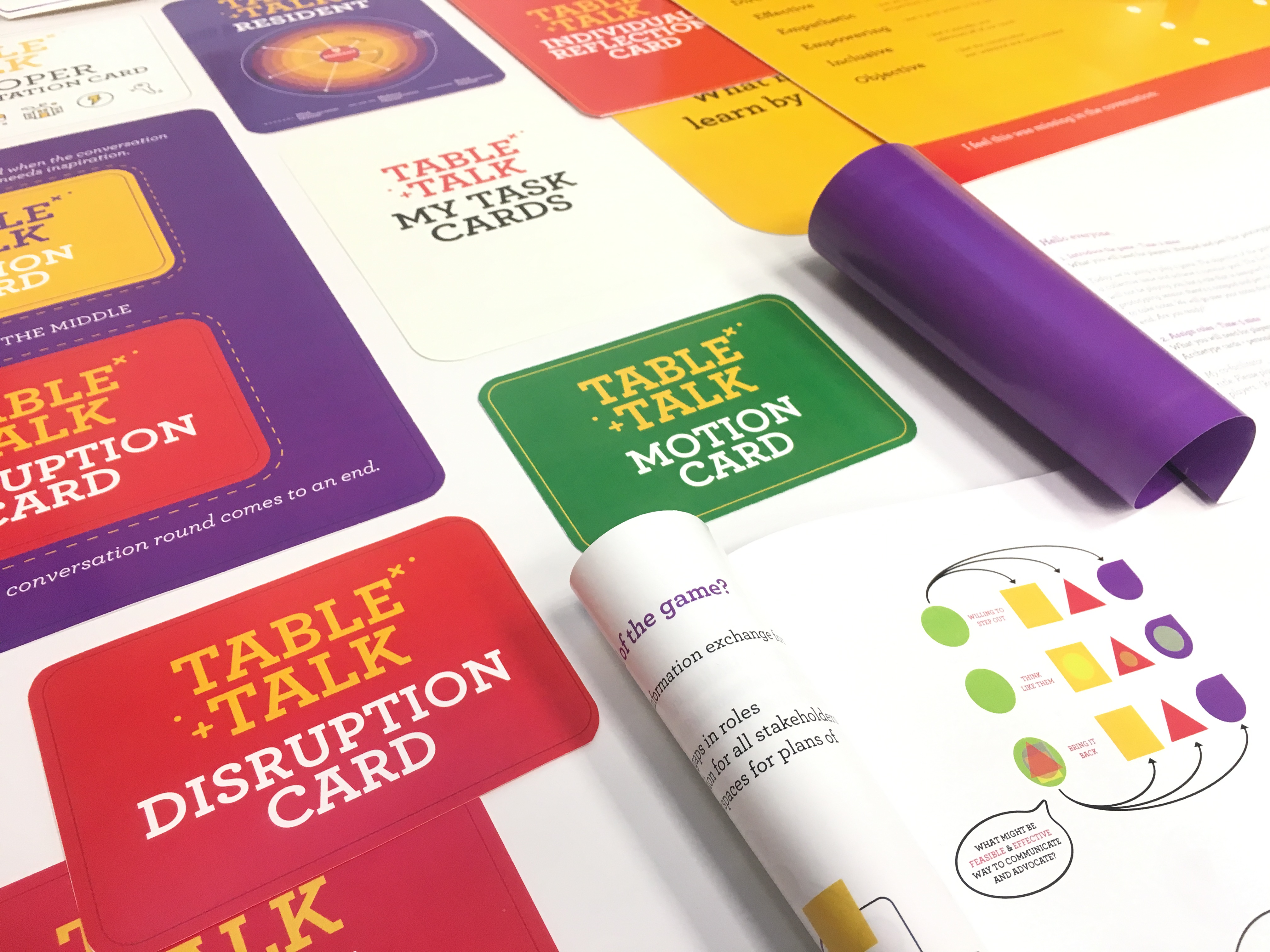
A facilitated role-play card system that puts residents, officials, industry, and advocates around one table and has them trade seats to work a real issue together.
Crucially, it was built to be run by Harambee House — not by us. The community keeps the tool after the studio ends.
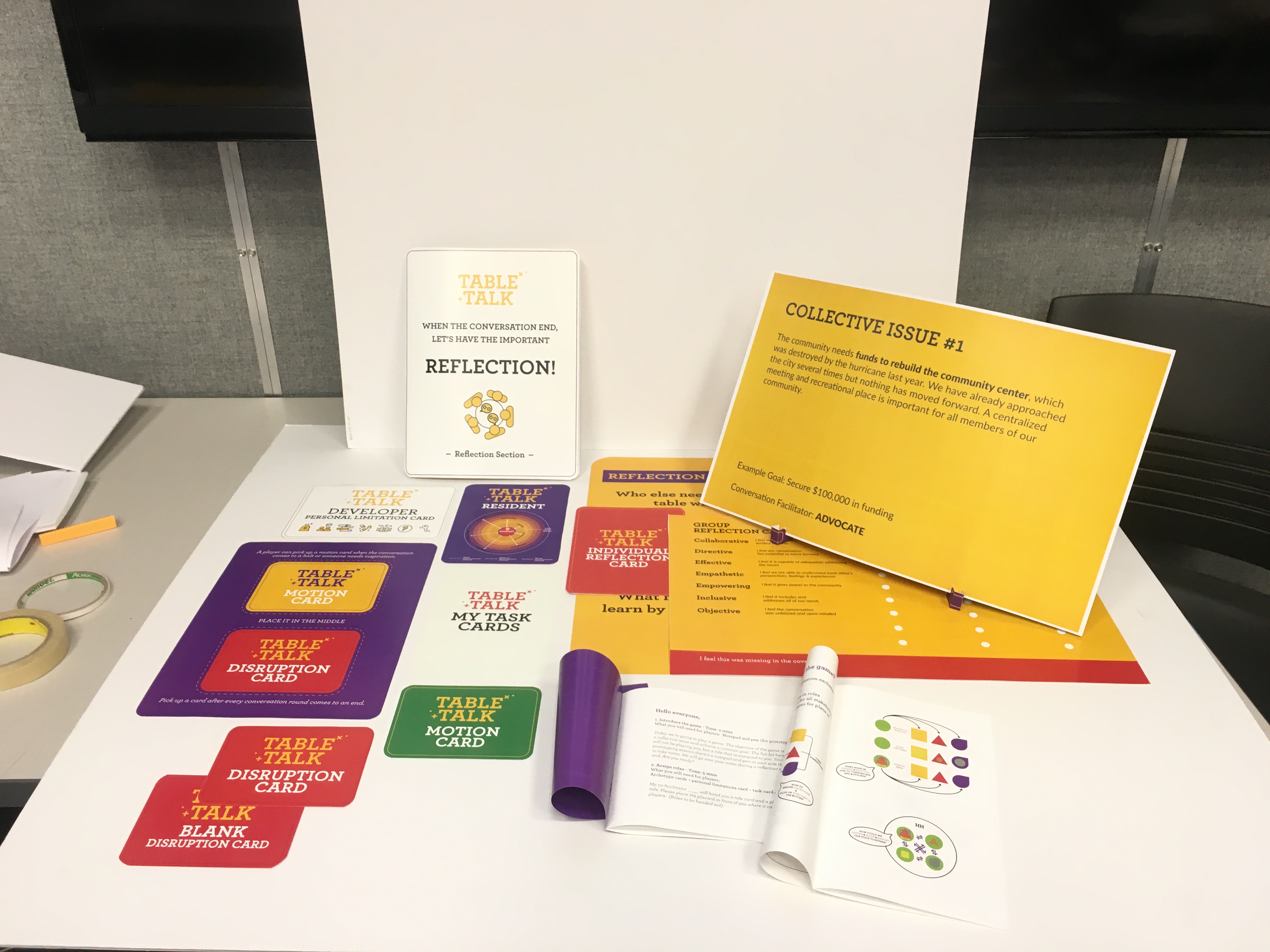
(archetype / issue / motion)images/tabletalk-06.jpg
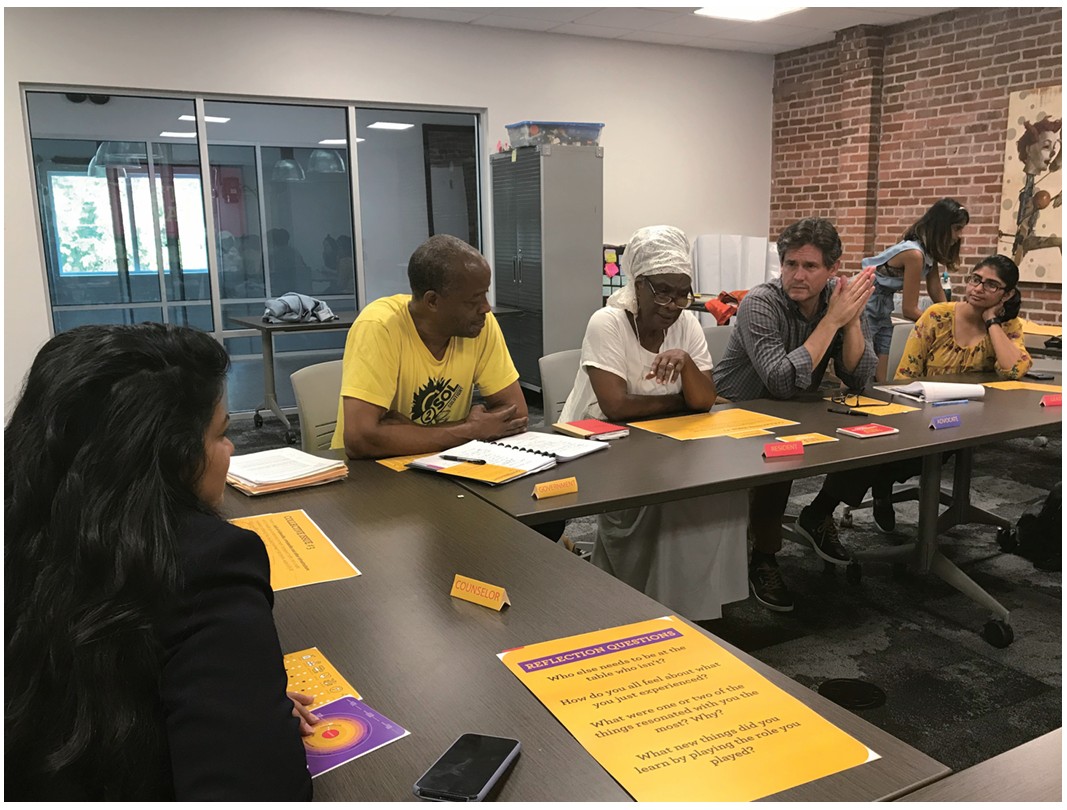
at Harambee Houseimages/tabletalk-07.jpg
Designed to outlive the semester
Ten weeks couldn't solve a decades-old injustice — but they laid real groundwork: a tool the community owns, and a blueprint to digitize it into an ongoing platform with more scenarios, virtual facilitation, and a model other near-port communities could reuse.